


Exploring Academic Stress, Reveals Student Well-Being.
EXPLORATORY DATA ANALYSIS
Ever tried studying while someone’s blasting music next door, your phone keeps buzzing, and your family’s chatting in the background? It’s almost impossible to focus, right? For students at any level whether in high school, college, or even postgraduate studies the environment they study in can make a huge difference in how stressed or calm they feel. Some thrive in quiet corners, while others struggle to stay focused amid constant noise and distractions.
This article explores how different study environments and academic stages affect students’ stress levels, and it is not just that, revealing that academic pressure is not only about homework, exams, or grades. The space where a student studies whether it’s quiet and comfortable or noisy and full of distractions plays a big role in how easily they can focus and how much stress they feel. A peaceful study environment can help the mind stay calm, improve concentration, and make learning more enjoyable, while a disrupted or noisy space, unnecessary pressure can quickly increase frustration and anxiety.
Beyond the environment, the level of study from high school to undergraduate and postgraduate also shapes how students experience stress. Each stage brings its own challenges and expectations. High school students may struggle with balancing heavy workloads and family expectations, undergraduates often face newfound independence and time management pressures, and postgraduates deal with more advanced demands like research and career preparation. Together, these factors remind us that managing academic stress isn’t just about studying harder; it’s about understanding how our surroundings, responsibilities, and mindset work together to influence our well-being and performance.
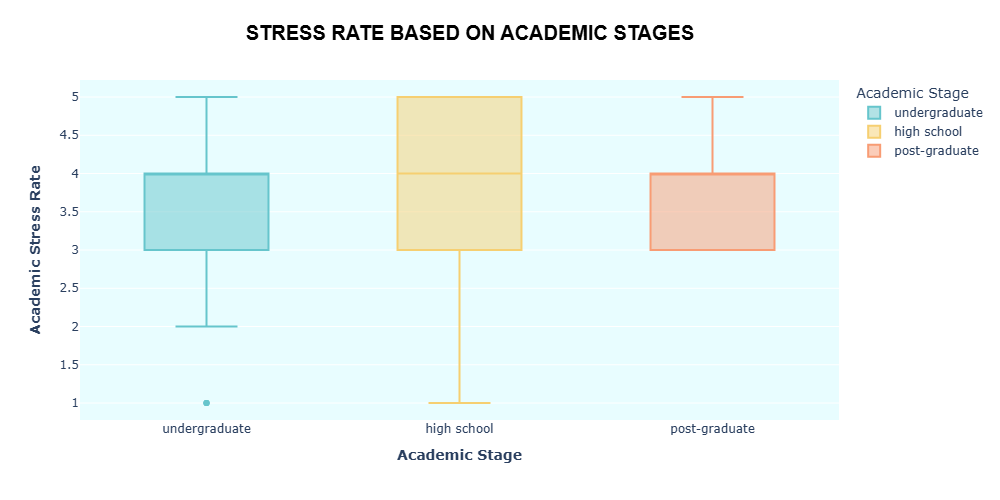
From the chart, it’s clear that high school students tend to experience the highest levels of stress. Their stress scores range from very low to the maximum level, but most of them fall on the higher side. This makes sense because high school is often a time filled with exams, expectations from parents, and the pressure of deciding what comes next in life. Some students handle it well, while others struggle more, which is why their stress levels vary so much.
University students, have the average stress level on a bit lower stages, sitting around the middle. They still face pressure from assignments, deadlines, and balancing personal life but many have started finding their rhythm. By this stage, students are more independent and usually know how to manage their time and emotions better than in high school. Still, there are some who experience extreme stress, shown by the wider range of results.
When it comes to postgraduate students, their stress levels appear the most balanced. The range is narrower, meaning most of them feel about the same level of stress not too high, not too low. Postgraduate students are usually more focused and have clearer goals, which helps them handle challenges more calmly. They’re not free from stress, but they seem to have more control over it.
The simple story behind it: stress is highest during high school, steadier during university, and most manageable during postgraduate studies. It reminds us that growing up and gaining experience doesn’t just make us smarter it also helps us deal with pressure better. Understanding this pattern can help teachers, parents, and schools support students more effectively, especially those who are still learning how to cope with academic stress.
And how to get more information if any correlation of stress with other things that connected the following chart may tell us what exactly is that other things that may effect and correlated to student stress.
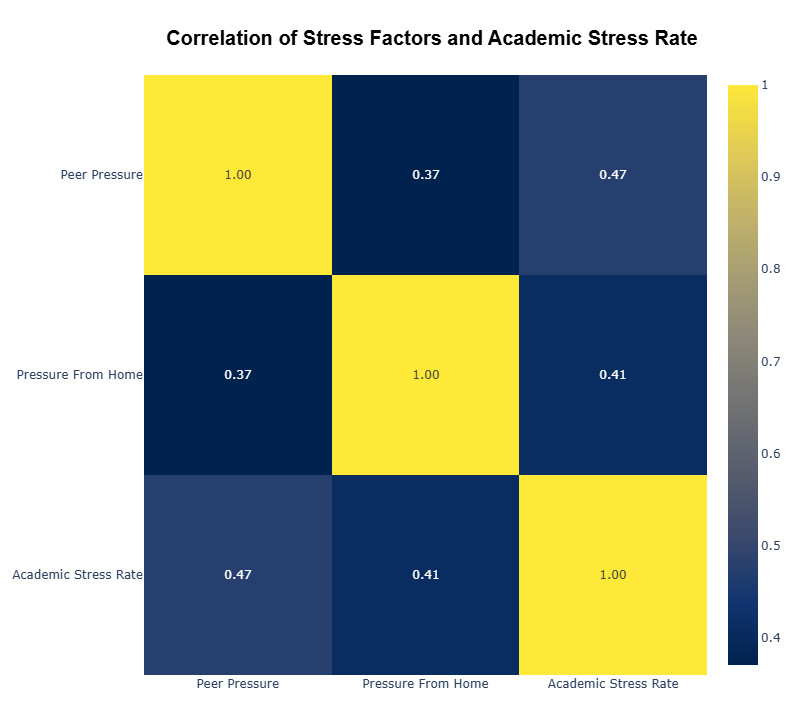
Such a clear picture of how different kinds of pressure like the ones coming from friends or from home are connected to how stressed students feel about school. In simple terms, it shows that when one type of pressure increases, stress levels tend to go up too. It’s not surprising, but seeing it visually helps us understand just how closely these pressures are tied to each other.
One of the biggest takeaways here is how much peer pressure affects students. When friends become a constant point of comparison whether it’s about grades, looks, or achievements it can quietly build up emotional tension. Students start feeling like they always need to keep up, fit in, or prove themselves. Over time, that can drain their energy and motivation, turning school from a place of learning into a constant mental competition.
Then there’s pressure from home, which can be just as powerful. Parents and family members often want the best for their children, but those expectations can sometimes turn into stress, especially when they’re too high or unrealistic. Many students push themselves hard not just to succeed, but to make their families proud. While that can be motivating, it can also become emotionally exhausting when the balance tips too far.
What’s interesting is how these pressures tend to overlap. Students who feel a lot of pressure at home often also feel it from their peers. It’s like the stress is coming from both sides at school and at home leaving very little space to breathe. This combination can make academic life feel overwhelming for many young people.
This reminds us that academic stress doesn’t exist in isolation. It’s shaped by relationships, expectations, and the environment around students. Reducing that stress isn’t just about studying smarter or working harder it’s also about creating supportive spaces where students feel understood, not compared or judged. When friends, families, and teachers all play their part in easing that pressure, school can become not just about performance, but about genuine growth and learning.
How about the study environment?
The study environment is actually a much bigger deal than most people realize. It can make or break how well students focus and how stressed they feel.
A peaceful, quiet space helps the mind stay calm and improves concentration, while noisy or constantly disrupted surroundings can easily raise stress levels and make studying feel like a battle. Whether it’s the hum of chatter, the sound of traffic, or just too many distractions, the environment we study in shapes our ability to stay focused, relaxed, and productive proving that sometimes, success isn’t just about how hard you study, but where you study, let us dig a little dipper about it.
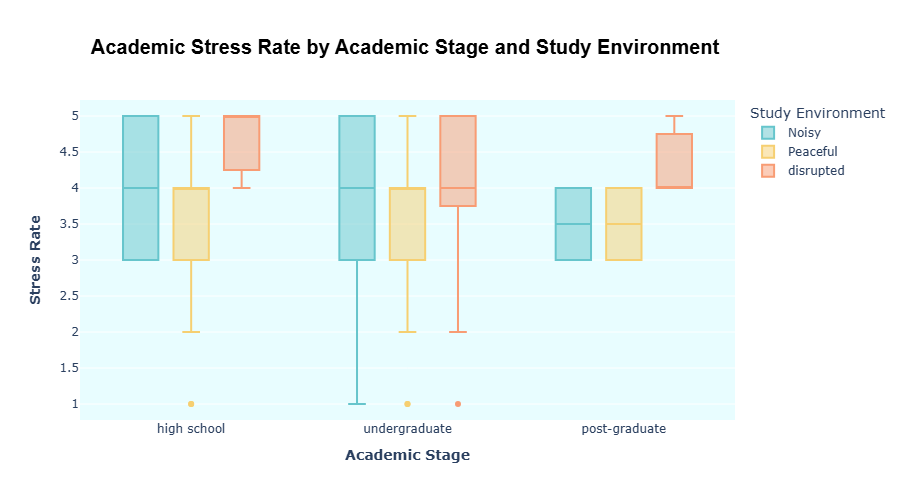
This chart shows how different study environments: noisy, peaceful, and disrupted affect students’ stress levels at various stages of education. It’s easy to see that where you study really matters. Students in a peaceful environment with the lowest disruptions consistently show lower stress levels, no matter if they’re in high school, university, or postgraduate studies. A calm and quiet space helps them stay focused and think clearly, which naturally makes studying feel lighter and less overwhelming.
In contrast, those who study in noisy or disrupted environments tend to experience higher stress. When the surroundings are full of distractions like constant chatter, background noise, or interruptions it becomes much harder to concentrate. For example, an undergraduate student trying to study in a dorm with people those keep coming and going might find it almost impossible to stay focused for long. Over time, that kind of environment adds up, making studying more tiring and mentally draining.
Interestingly, postgraduate students seem to handle stress slightly better even when their study space isn’t ideal. This could be because they’re more experienced and have learned how to manage distractions or control their time more effectively. But even for them, a peaceful environment still makes a noticeable difference in reducing stress and improving focus.
Overall, this reminds us that the environment we study in can be just as important as the effort we put into studying itself. A quiet, organized, and positive space doesn’t just make learning easier it also helps keep the mind calmer, making the whole experience far less stressful.
But how student dealt with it? Dealing with academic stress is something every student faces at some point , whether it’s the pressure to meet deadlines, handle exams, or live up to expectations.
Stress doesn’t have to take over your life. With the right coping strategies, students can learn how to manage pressure in a healthier way and stay balanced even during the busiest times. This section show some coping strategies that how student handle academic stress from Analyze the situation and handle it with intellect, Social support (friends, family), or just making emotional breakdown by crying out loud.
Press enter or click to view image in full size
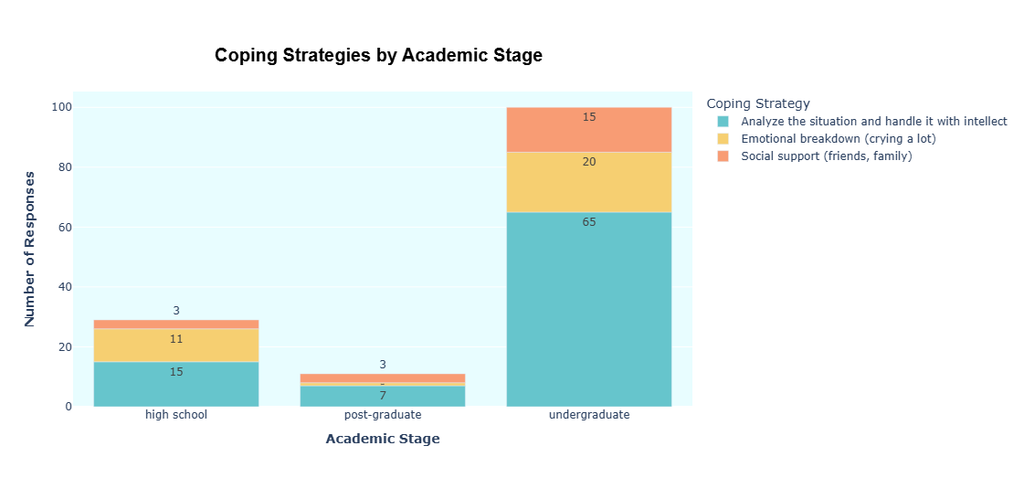
The chart shows how students from different academic stages cope with stress in their own ways and it’s pretty interesting to see how those strategies change as they grow older. It compares three main ways of handling stress: thinking things through logically, having emotional breakdowns, and seeking support from friends or family.
From the looks of it, undergraduate students rely most on logic and problem-solving when facing academic challenges. They tend to try and “figure things out” analyzing the situation, planning ahead, and dealing with stress in a more practical way and their intellectuality. This could be because they’re at a stage where they’re learning to balance independence and responsibility, so they try to manage things on their own before asking for help. Even so, a fair number still experience emotional burnout or turn to friends and family when things get overwhelming showing that stress at this level can come in waves, and everyone handles it differently.
Meanwhile, high school students seem to show a mix of emotional and rational coping. Many still respond to stress emotionally crying, feeling frustrated, or getting overwhelmed which is understandable since high school is often filled with pressure from grades, peers, homework and expectations. However, some are already starting to use more mature ways of dealing with problems, like thinking critically or talking to someone they trust, which shows the beginning of emotional growth.
For postgraduate students, the numbers are much smaller, but it’s clear they handle stress more calmly and thoughtfully. By this stage, they’ve likely learned how to keep emotions in check and rely more on logical problem-solving. They may also have a stronger sense of self-awareness and experience in managing both academic and personal pressures, which helps them stay grounded even when stress builds up.
Overall, this chart paints a very human picture students at every stage deal with stress differently, but most gradually shift from reacting emotionally to handling things with more understanding and logic as they grow. It’s a reminder that learning how to manage stress effectively doesn’t happen overnight; it’s a skill that develops over time through experience, reflection, and the right kind of support.
Let’s take a step back and look at the stage that seems to carry the most fragile balance when it comes to academic stress high school.
This is where everything starts to feel heavier: the expectations, the comparisons, the race for grades, and the fear of what comes next. It’s that point in life where students are no longer kids, but not quite adults either, and the pressure from both school and home often hits all at once. Because of that, high school becomes a crucial stage to understand not just for how much stress students face, but also for how they try to handle it. By looking deeper into this phase, we can see what really lies behind their stress and what kind of support could make all the difference.
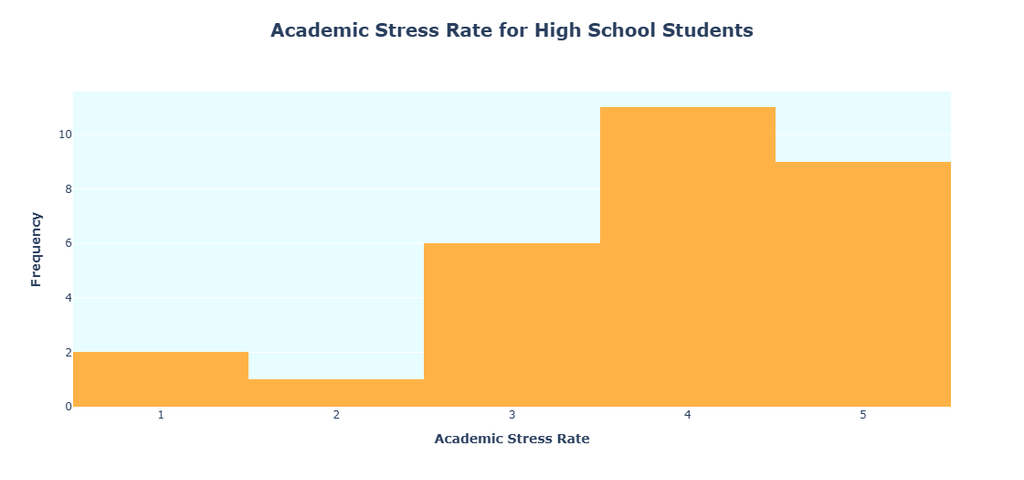
This data focuses on high school students the group that, as we’ve seen, tends to carry the most academic stress. The bars here show how often students report different levels of stress, and it’s easy to notice that most of them are clustered toward the higher end. In other words, many high school students experience a lot of stress, with only a few saying they feel little to none.
This makes sense when we think about what high school is really like. It’s a time packed with deadlines, exams, competition, homework and big decisions about the future. Students are trying to balance everything schoolwork, family expectations, social life, and sometimes even extracurriculars or part-time jobs. It’s no wonder that stress levels climb so easily during these years.
What’s also interesting is that very few students fall on the “low stress” side of the chart. This suggests that feeling stressed has almost become the norm in high school. For some, it might come from pressure to perform well academically, while for others it could be emotional like wanting to fit in or feeling uncertain about what comes next after graduation.
Overall, this chart paints a clear picture: high school can be one of the most stressful stages in a student’s academic journey. The challenge now isn’t just recognizing that stress is common it’s figuring out how to help students manage it better, so it doesn’t overwhelm their confidence or motivation.
What is the effect and result of high stress in academic for high school students?
If high levels of stress in high school aren’t managed properly, they can lead to serious consequences that go far beyond schoolwork. Uncontrolled stress can drain a student’s energy, motivation, and focus, causing grades to drop and confidence to fade. When pressure piles up without healthy outlets, students may start losing interest in learning, struggle to concentrate, or feel overwhelmed by even small challenges. Over time, this can lead to burnout where students no longer have the emotional or mental strength to keep up with their studies.
The effects can also extend into their emotional and physical well-being. Persistent stress can cause mood swings, anxiety, sleep problems, or even depression, and if ignored, it may shape how students handle pressure later in life. That’s why it’s so important for schools, parents, and students to work together in recognizing and addressing stress early. A supportive environment, balanced expectations, and open communication can turn academic life from a constant struggle into a meaningful, healthy journey of growth and self-discovery.
Remember, dealing with high school stress isn’t something students should have to face alone it’s a shared responsibility between them, their families, and their schools. For students, one of the most important things is learning how to manage time and emotions in a healthy way. Simple habits like setting realistic goals, taking short breaks, staying organized, and talking openly about their feelings can make a huge difference. Instead of bottling up emotions or trying to handle everything perfectly, students should feel encouraged to reach out whether it’s to a friend, teacher, or counselor because sharing what’s going on in their minds can lighten the load more than they might expect.
From the school’s side, creating a supportive environment is key. Teachers can play a big role by balancing academic expectations with empathy giving clear guidance, avoiding unnecessary pressure, and reminding students that it’s okay to make mistakes. Schools could also introduce mental health programs, relaxation corners, or counseling sessions that allow students to decompress and talk about their struggles in a safe space.
Meanwhile, parents have just as much influence. Instead of focusing only on grades or results, they can encourage effort, balance, and well-being. A simple “I’m proud of you for trying” can mean a lot to a stressed-out teenager. Keeping open communication, setting realistic expectations, and allowing room for rest and fun are all vital. When students feel supported both at home and at school, they’re more likely to face challenges with confidence rather than anxiety.
In the end, helping high school students manage stress is about teamwork a combination of understanding, guidance, and care. When everyone around them contributes to a healthier, more compassionate environment, school becomes not just a place to study, but a space where young people can grow stronger, smarter, and happier.
In a clear stage Social Supports is the main key.
Look how social support like help from friends, family, or classmates connects to students’ stress levels. Each dot represents someone’s experience, showing how stress changes depending on how much support they have. What stands out is that students with stronger social circles tend to handle stress better, while those who feel alone or unsupported are more likely to show higher levels of stress.
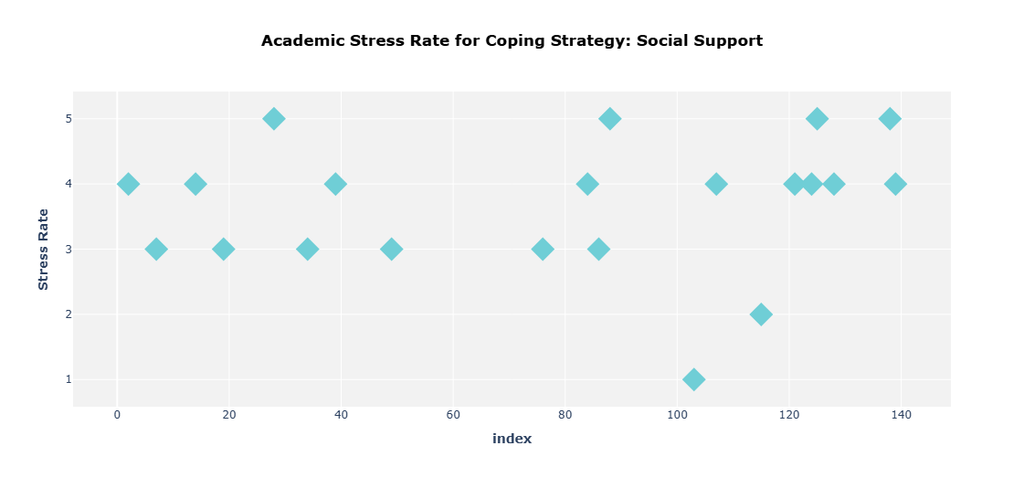
In simple terms, this means that having people to lean on really matters. When students have someone to talk to, share their worries with, or just spend time around, it helps them feel lighter and more grounded. Social support doesn’t necessarily remove the problems, but it makes them easier to face. On the other hand, when students feel isolated even if they’re doing well academically stress can build up quickly and feel heavier than it should.
Overall, we cope better together. Whether it’s a quick chat with a friend, a bit of encouragement from family, or guidance from a teacher, small acts of connection can make a big difference in helping students stay emotionally balanced and motivated through academic challenges.
In the end, this exploration of academic stress paints a clear picture stress is not just about studying too much or facing tough exams. It’s deeply connected to the environment students learn in, the expectations they carry, and the kind of support they receive from people around them. From high school to postgraduate levels, stress shows up in different forms, but the root cause often comes back to pressure, comparison, and the struggle to keep up. The good news is that it’s not a hopeless cycle. With awareness, empathy, and the right coping strategies, students can learn to manage stress in ways that build resilience instead of exhaustion.
Ultimately, handling academic stress is a shared effort between students, parents, and educators. Students need safe spaces to express themselves, schools must balance performance with well-being, and families should offer understanding instead of unrealistic pressure. When all these parts come together, education becomes more than just a race for grades it becomes a journey of growth, balance, and self-discovery. Because at the end of the day, success in school means very little if students lose their joy, confidence, and peace along the way.
Data Source
The dataset used in this analysis was sourced from Kaggle and is licensed under the Open Data Commons Public Domain Dedication and License (PDDL v1.0). Datasets published by Ayesha Imran : Academic Stress Level Maintenance Dataset.
Author’s Notes:
The analysis presented here is purely for educational and exploratory purposes. This article is not a scientific study but a data analytics learning project based on publicly available datasets. Any statements should be understood within the context of the samples analyzed, not as universal conclusions. Results do not represent the global population, as cultural, environmental, and health factors may vary across groups.
Parts of the data analysis and visualization in this article i created by using Python, Plotly & Pandas Libraries, and i utilized Copilot 365 to streamline and refine the code for better workflow. Hero image was generated using Gemini: nano banana.