
When people hear “hotel sales and marketing,” many picture someone making cold calls or designing pretty Instagram posts. And while both of those things happen, they barely scratch the surface of what this department actually does, and how deeply it shapes a hotel’s identity, relationships, and long term survival.
“Sales and marketing is not about filling rooms for tonight. That is revenue management’s job. Sales and marketing is about making sure people want to come back next year, and tell their friends to come too.”
This distinction matters more than it sounds. A hotel can be fully booked through clever pricing and still fail in the long run if nobody feels emotionally connected to the brand, if corporate clients quietly drift to competitors, or if travel agents stop recommending the property. Sales and marketing exists to build something pricing alone cannot: relationships and reputation.
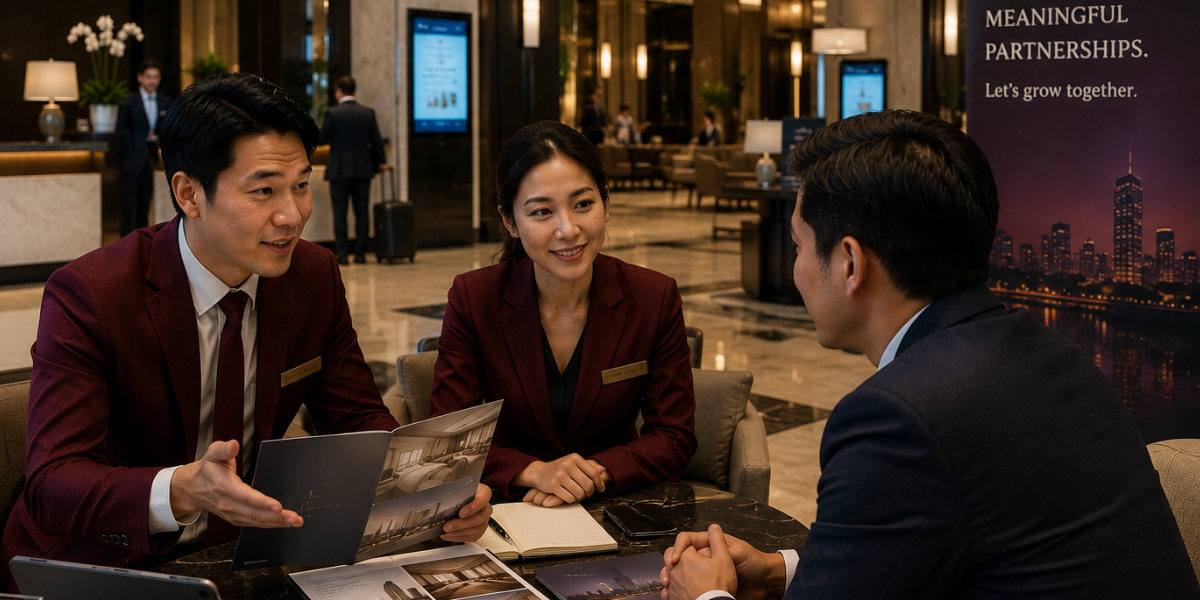
Let us start with sales, often the less visible half of this department. Hotel sales teams spend a significant amount of their time building and maintaining relationships with corporate accounts, travel agents, wedding planners, and event organizers. This is rarely a one-time transaction.
A sales manager might spend months, sometimes years, nurturing a relationship with a company before they ever book a single room, simply because trust and reliability matter enormously when someone is responsible for organizing a colleague’s business trip or a client’s important event.
Site inspections are a big part of this world, though guests almost never see them happen. A company planning a conference for two hundred people will often send someone to physically walk through the hotel, check the meeting rooms, taste sample menus, and ask detailed questions about logistics. These visits can make or break a deal worth tens of thousands of dollars, and preparing for them involves coordination across almost every department in the hotel, from banquets to housekeeping to engineering.
“A single corporate client who trusts a hotel can be worth more over five years than dozens of one-time leisure bookings. That is why relationship building, not discounting, is often the real currency of hotel sales.”
Now let us talk about marketing, which has changed dramatically over the past decade. It used to be mostly about brochures, print ads, and partnerships with travel agencies. Today, a huge part of hotel marketing happens online, through social media, search engines, email campaigns, and increasingly, through how a hotel responds to reviews and engages with user generated content.
Here is something that surprises many people: photos and videos used in hotel marketing are rarely just “nice to have.” They are strategic tools designed to set accurate expectations. A room photographed with a wide angle lens that makes it look twice its actual size might attract bookings initially, but it often leads to disappointed guests and negative reviews later. Experienced marketing teams understand that honest, well composed visuals build trust, while exaggerated ones create problems that other departments then have to deal with.
Social media has also changed the relationship between hotels and guests in a way that did not exist before. A single guest with a large following sharing their experience can influence bookings more than a traditional advertisement ever could. This is why many hotels now actively engage with content creators, not just for promotion, but to build a library of authentic experiences that reflect how the property actually feels, rather than how it looks in a polished brochure.
“Marketing today is less about telling people how great a hotel is, and more about showing them what their experience there might feel like, then letting that feeling do the convincing.”
Online reviews deserve special mention here, because they sit right at the intersection of sales, marketing, and guest experience. A thoughtful, personalized response to both positive and negative reviews is now considered a core marketing skill. Future guests often read these responses just as carefully as the review itself, looking for signs of how a hotel handles problems, communicates, and treats its guests when something goes wrong.
There is also a quieter, more strategic side to marketing that involves understanding a hotel’s position in its market. Is the property positioned as a luxury escape, a business friendly base, a family destination, or a boutique experience for travelers seeking something different? Every piece of content, every partnership, and every campaign needs to reinforce that identity consistently. A hotel that tries to be everything to everyone often ends up standing out to no one.
For those new to hospitality, sales and marketing might initially seem like a department disconnected from daily operations, focused on external image rather than internal work. But in reality, this team is constantly translating what happens inside the hotel, the service, the food, the atmosphere, the people, into a story that resonates with the right audience, and then nurturing the relationships that turn that story into long term loyalty.
So the next time you see a beautifully shot hotel video, a well written response to a review, or find yourself remembering a property fondly months after your stay, know that there was likely a quiet, strategic effort behind that connection, built not for one booking, but for a relationship that lasts well beyond it.