Every hotel, no matter how polished it looks from the lobby, has its own set of long running “friendly tensions” between departments. Ask any veteran hotelier, and they will smile knowingly when certain pairings are mentioned. These are not feuds in the dramatic sense, but rather natural friction points that exist because different departments are, quite literally, trying to win at slightly different games, even though everyone is technically on the same team.
“Most interdepartmental tension in a hotel is not a sign that something is broken. It is often a sign that two departments are doing their jobs well, just with different priorities pulling in opposite directions.”
Understanding these dynamics is not about pointing fingers. It is actually one of the more fascinating aspects of hotel operations, and for anyone working in the industry, recognizing these patterns early can turn frustration into something closer to professional humor, and eventually, mutual respect.
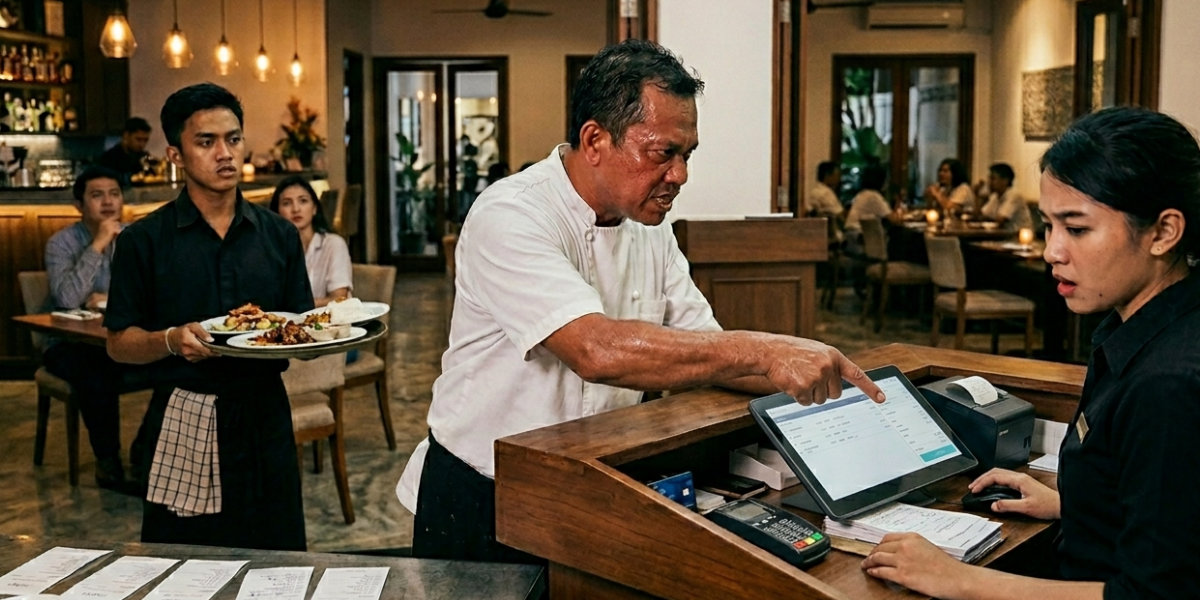
Let us start with perhaps the most famous pairing of all: Kitchen versus F&B Service. On paper, these two teams share one goal, delivering a great dining experience. In practice, they often experience the same moment from completely opposite angles.
The kitchen’s world is measured in minutes and timing, every dish has a window, a “fire time,” a sequence. The service team’s world is measured in guest experience, reading the table, sensing when someone wants their next course, managing pacing for a couple having a quiet conversation versus a large group celebrating loudly.
This is where the classic tension begins. A server might ask the kitchen to “hold” a course because the table is deep in conversation, while the kitchen, already juggling six other tickets, sees that request as throwing off their carefully built rhythm. From the kitchen’s side, it can feel like service does not understand how difficult it is to keep food at peak quality while waiting. From service’s side, it can feel like the kitchen does not understand that rushing a guest who is not ready can ruin an entire evening.
“The kitchen protects the food. Service protects the guest’s experience of time. Both are right, and both are necessary, which is exactly why this tension never fully disappears, it just gets managed better with experience.”
The healthiest kitchens and service teams are the ones who have learned to communicate in real time rather than after the fact. A quick heads up, “table six is going to need a bit more time,” or “we’re about to fire table six, can you check if they’re ready,” turns a potential clash into simple coordination. The friction does not vanish, but it becomes productive friction, the kind that actually improves the guest experience rather than working against it.
Another classic pairing is Front Office versus F&B, particularly around something surprisingly small on the surface: room service and breakfast timing. Front office is focused on smooth arrivals and departures, managing room readiness, and handling guest requests efficiently. F&B, especially during breakfast service, is focused on managing a wave of guests arriving within a narrow window, often with limited seating and kitchen capacity.
Tension here often shows up in subtle ways. A guest checking out late might still want to use breakfast, which F&B has to accommodate even as they are trying to wind down service and reset for lunch. Or front office might promise a guest “early check-in” without realizing housekeeping has not finished, which then puts pressure on housekeeping, who in turn may feel like front office does not fully understand how long a proper room turnover actually takes.
“Front office often works in promises, what can be offered to make a guest happy right now. Other departments often work in sequences, what needs to happen, in what order, before that promise can become reality. When these two languages are not translated well between teams, small promises can create big pressure elsewhere.”
This is why many experienced hotels build in deliberate communication rituals, like daily briefings where departments share expected arrivals, VIPs, special requests, and potential bottlenecks. These briefings might seem like a small administrative routine, but they often quietly prevent dozens of small frictions from ever becoming guest facing problems.
Housekeeping versus Engineering is another pairing worth mentioning, often overlooked because it rarely involves guests directly. Housekeeping wants rooms perfect and ready as quickly as possible. Engineering wants to do thorough, sometimes time consuming repairs to avoid repeat issues. A quick fix might satisfy housekeeping’s timeline, but if it leads to the same problem recurring a week later, engineering ends up doing the same job twice, while housekeeping faces yet another room out of service during a busy period. Here too, the tension is less about disagreement and more about different definitions of “done.”
Sales versus Operations is a tension that exists almost everywhere, though it takes different forms depending on the property. Sales teams are often focused on securing bookings, sometimes group bookings or events that look fantastic on paper. Operations teams are focused on what it actually takes to deliver that event flawlessly, staffing, setup time, logistics. A sales team might confirm a large group with relatively short notice, seeing it as a win for revenue, while operations sees it as a significant logistical challenge that affects multiple departments simultaneously.
“Sales sells possibility. Operations delivers reality. The gap between those two things is where this particular tension usually lives, and the size of that gap often depends on how early and how clearly information is shared.”
What makes all of these tensions interesting, rather than simply problematic, is that they tend to exist in every hotel, everywhere, regardless of star rating, location, or brand. They are not signs of dysfunction. They are, in many ways, signs of a healthy operation where each department genuinely cares about doing their part well. The real differentiator between an average hotel and an exceptional one is not the absence of these tensions, but how quickly and gracefully they get resolved when they arise.
Many hoteliers will say that some of the strongest professional relationships they have ever built came out of these very frictions, a kitchen chef and a service manager who learned to read each other’s signals after years of working busy nights together, or a front office manager and a housekeeping supervisor who developed their own shorthand for handling tight turnovers. Over time, what once felt like opposing priorities often becomes a kind of quiet partnership, built through shared pressure and mutual respect earned the hard way.
For anyone new to hospitality, these dynamics are worth understanding early, not as warnings, but as part of the texture of working in a hotel. Every department genuinely wants the same outcome, a guest who leaves happy, but they arrive at that outcome from different directions, carrying different pressures, timelines, and responsibilities. Recognizing this, rather than taking friction personally, is often one of the quiet markers of someone who is growing into a more experienced hospitality professional.
In the end, perhaps the healthiest way to look at these classic rivalries is this: they exist not because departments are working against each other, but because each one is fighting hard, in its own way, for the same guest’s experience, just from a slightly different corner of the building.