When people think of hotel security, the image that often comes to mind is fairly simple: someone in a uniform standing near the entrance, maybe checking bags, maybe just standing there looking serious. But that image barely scratches the surface of what security and safety actually mean inside a hotel, and how much of it operates in ways guests are never meant to notice at all.
“Good security in a hotel is rarely about visible force. It is about presence without intimidation, awareness without suspicion, and protection that feels like care rather than control.”
This balance is harder to strike than it sounds. A hotel is, by nature, an open environment. People are constantly arriving, leaving, wandering through lobbies, exploring corridors, and moving between public and private spaces. Unlike an office building or a gated facility, a hotel cannot simply lock everything down without destroying the very experience guests are paying for. So security teams operate within a strange paradox: protect everyone, without making anyone feel watched.
Much of this work happens through observation rather than confrontation. Experienced security staff are trained to notice patterns, not just individuals. Someone walking confidently toward an elevator with a room key behaves differently than someone wandering uncertainly through guest floors without one.
These differences are subtle, often unconscious to the person being observed, but they are exactly the kind of details security teams are trained to pick up on quietly, without ever making a guest feel scrutinized.
Access control is another area where most of the real work is invisible. Modern hotels rely heavily on systems that restrict which areas a keycard can open, when, and for how long. A staff keycard might work in back of house corridors during a shift, but not after hours. A guest’s room key might stop working at checkout time, even if they have not physically checked out yet. None of this requires a person standing at every door, yet it quietly shapes who can go where, and when, throughout the entire property.
“Most security measures in a hotel are designed to be felt only in their absence. A guest never thinks about why a door didn’t open for someone who shouldn’t be there. They only notice if it did.”
Emergency preparedness is another area that runs constantly in the background, often without staff even mentioning it to guests. Fire evacuation plans, medical emergency procedures, severe weather protocols, these are not just documents sitting in a binder somewhere. Hotels regularly run drills, sometimes during quiet hours so guests are unaffected, to make sure that if something does happen, staff across every department know exactly what to do, without hesitation or confusion.
There is also a side of hotel safety that intersects closely with something guests do experience directly, even if they do not connect it to security: how staff handle unexpected situations. A guest who has had too much to drink at the bar, a dispute between two parties in a public area, someone who seems unwell in the lobby, these moments require a particular kind of skill. The goal is almost always de escalation first, resolving the situation calmly and discreetly, in a way that protects everyone involved, including the person causing concern, without turning it into a spectacle for other guests.
“In hospitality, the best outcome to a difficult situation is often one where most guests never even realize anything happened at all.”
Technology has changed this department significantly over the years, though not in the dramatic, high tech way movies often portray. CCTV systems, for instance, are rarely about watching guests. Their primary purpose is usually to protect the hotel itself, monitoring entrances, parking areas, and back of house zones, and to provide clarity if an incident needs to be reviewed later. Most footage is never watched in real time by anyone; it simply exists as a quiet safeguard, reviewed only when genuinely needed.
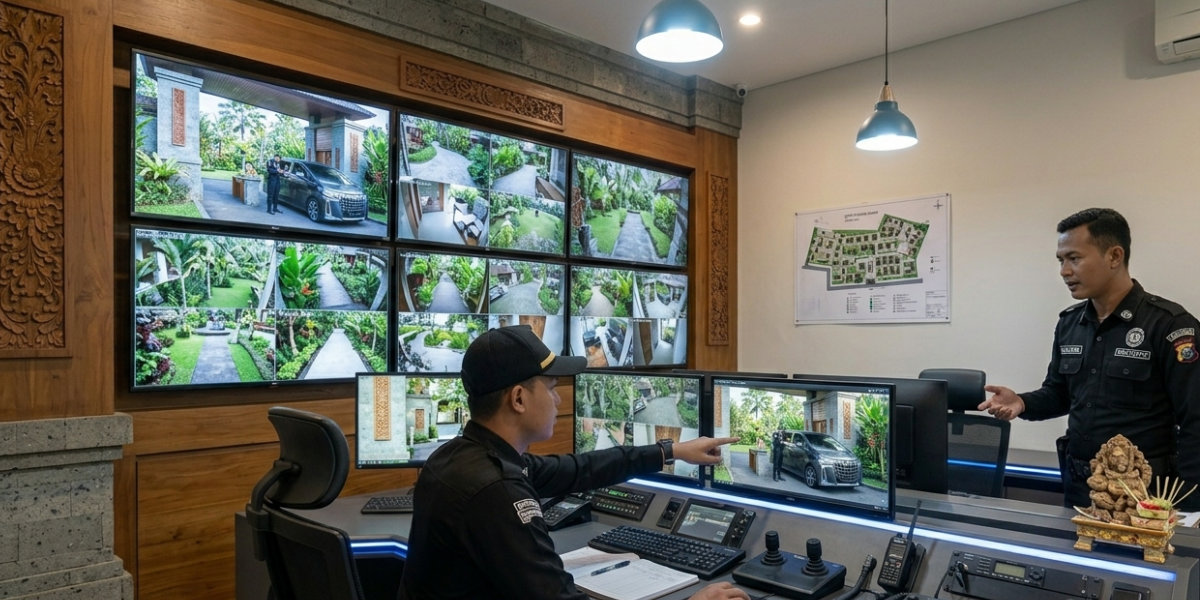
Cybersecurity has also become part of this conversation in recent years, something that would have seemed unrelated to “security” in a traditional sense not long ago. Guest information, payment details, booking histories, all of this now requires protection just as serious as physical safety measures.
Many hotels work closely with IT teams to ensure systems are regularly updated and monitored, recognizing that a guest’s sense of safety today includes their personal data, not just their physical person.
There is also a quieter, more human dimension to this department that rarely gets discussed. Security staff often work long, irregular hours, frequently overnight, and are sometimes the first point of contact for guests in genuinely vulnerable moments, a lost passport, a family emergency back home, a guest who simply feels unsafe and does not know who else to ask. In these moments, security is not just enforcing rules, it is offering reassurance, often quietly and without ever being thanked for it afterward.
For those exploring this side of hospitality, security and safety offer a unique kind of responsibility. It is a role built on vigilance without paranoia, structure without rigidity, and a deep understanding that the safest environments are often the ones that feel the most relaxed, precisely because so much careful work has gone into making them that way.
What guests experience as simply “feeling comfortable” in a hotel is, more often than not, the quiet result of a team working steadily in the background, watching not to control, but to protect.