Walk into a hotel restaurant during dinner service, and everything looks calm. Plates arrive on time, food looks beautiful, servers move smoothly between tables. But just beyond the kitchen door, a completely different world is unfolding, one that runs on speed, precision, and a kind of organized chaos that most guests never see.

This world is built around something called the kitchen brigade system, a structure that has existed in professional kitchens for over a century. While modern hotel kitchens have adapted it to fit their size and style, the core idea remains the same: every person has a clearly defined role, and the entire system depends on each role being executed flawlessly and on time.

At the top sits the Executive Chef, who is less of a cook in the traditional sense and more of an orchestrator. Menu planning, food cost control, supplier relationships, staff training, and consistency across every outlet in the hotel all fall under this role.

Many guests assume the Executive Chef is the one cooking their meal, but in a large hotel, this person is often more focused on systems and standards than on the stove itself.

Below that are the section chefs, each responsible for a specific station. There is usually someone dedicated to sauces, someone to grilled items, someone to cold preparations like salads and appetizers, and someone to pastry and desserts. Each station operates almost like its own small business within the kitchen, with its own prep work, timing, and rhythm. During a busy dinner service, these stations have to work in perfect sync, because a single dish often passes through two or three of them before it reaches the pass, which is the final checkpoint before food goes to the guest.

The pass itself is one of the most intense spots in any kitchen. This is where a senior chef checks every plate for temperature, presentation, portion size, and accuracy against the order. If something is even slightly off, a sauce slightly too thin, a garnish missing, a steak cooked one degree past what was ordered, it gets sent back. This is not about being difficult, it is about protecting the consistency that guests expect every single time they order that dish, whether it is their first visit or their fiftieth.

Timing is where the real skill becomes visible. A table of four might order four different dishes with completely different cooking times. A rare steak takes far less time than a slow braised dish, yet all four plates need to land on the table at the same moment, hot and fresh. This requires constant communication, usually shouted calmly across the kitchen in short, sharp phrases that sound almost like a different language to outsiders. “Two minutes on table twelve,” “fire the mains for six,” these are not random words, they are a coordination system refined through years of practice.
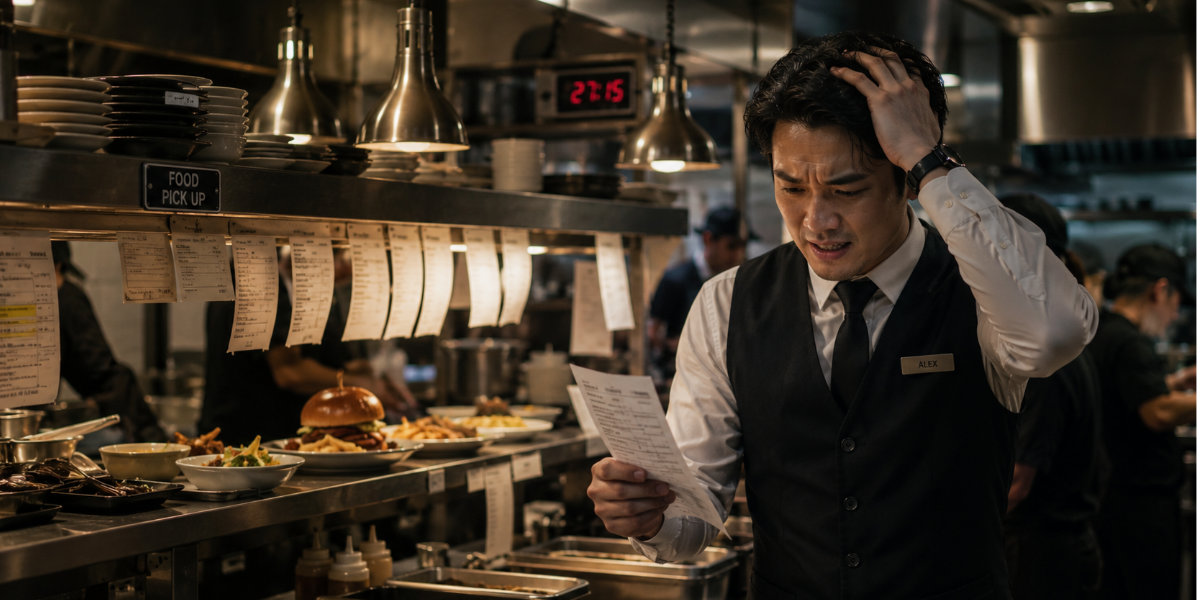
There is also a side of hotel kitchens that guests rarely consider, which is the sheer variety of demands happening at once. A single kitchen might be preparing breakfast buffet items, room service orders, a banquet for two hundred people, and an a la carte dinner service, all within the same few hours. Each of these has different standards, different plating styles, and different timing requirements, yet they often share the same equipment, the same staff, and the same limited space.

Pressure in a kitchen is real, and it is often misunderstood from the outside. The intensity during peak service is not about chefs being aggressive for no reason, it comes from the fact that timing mistakes directly affect a guest’s experience in a way that is hard to fix afterward.

A dish that arrives late or cold cannot simply be redone without affecting the rest of the table’s experience. This is why kitchens place such heavy emphasis on mise en place, the French term for having everything prepped and in its place before service even begins. Good mise en place is often the difference between a smooth night and a stressful one.

Behind all of this, there is also a strong sense of teamwork that rarely gets shown to the public. Despite the shouting, the heat, and the pressure, most professional kitchens operate on mutual respect and a shared understanding that everyone is responsible for the final result. A mistake by one station can affect everyone downstream, so covering for each other, communicating early about delays, and helping a colleague who is falling behind are not just nice gestures, they are essential parts of how the system survives a busy night.

For anyone new to hospitality, the kitchen is often seen as intimidating, loud, and fast-paced, and that is not entirely wrong. But it is also one of the most disciplined and structured environments in the entire hotel, built on decades of refined systems designed to deliver something simple on the surface: a great meal, served at the right time, exactly as promised.

So the next time a beautifully plated dish arrives at your table without a single delay, know that behind that swinging kitchen door, a small army just worked in perfect rhythm to make it happen, often without you ever hearing a single word of it.